Last updated: August 10, 2026
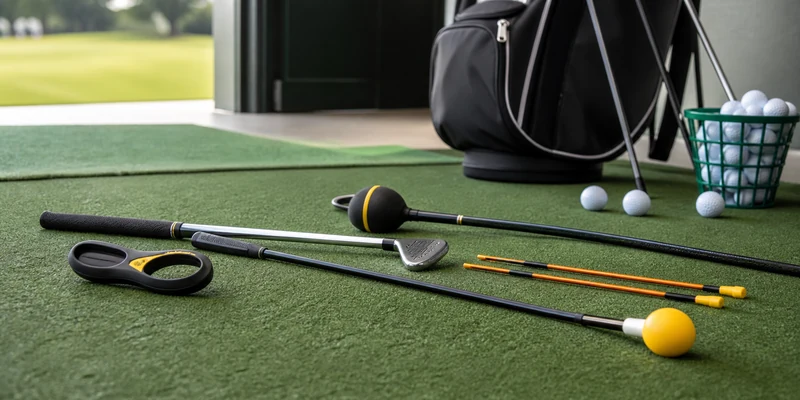
Shopping for a golf swing trainer means wading through some of the boldest marketing in golf. Every device seems to promise a new swing by Friday. The honest version is simpler: a swing trainer is a practice aid designed to give you a repeatable feel, usually for tempo, sequencing, or wrist mechanics, that you can rehearse at home without hitting a ball. What you build with it depends entirely on how consistently you use it.
This guide sorts the category into its three real families, tempo trainers, speed sticks, and release trainers, explains what each one is actually designed to do, and points to the models that come up again and again in golfer feedback. No miracle claims, just a clear look at which type fits the practice you will realistically do in a garage, backyard, or living room.
This article contains affiliate links. If you buy through them, we may earn a commission at no extra cost to you. Learn more.
Quick Answer
Which golf swing trainer should you buy?
- For most golfers, a flexible weighted tempo trainer like the Orange Whip is the sensible first buy: it doubles as a warm-up tool and is designed to promote rhythm and sequencing you can feel.
- If your priority is clubhead speed, a dedicated speed stick system with a structured protocol is the purpose-built route, but it demands consistent sessions to mean anything.
- If your miss traces back to flippy wrists through impact, a compact release trainer you can use indoors in a few spare minutes is the better match.
The Three Types of Swing Trainer, Compared
Almost every swing trainer on the market falls into one of three families, and picking the right family matters more than picking the right brand. This table is the map.
| Type | Designed to promote | Best for | Space needed |
|---|---|---|---|
| Tempo trainer (flexible, weighted) | Smooth rhythm, sequencing, and a full finish; also a popular warm-up tool | Golfers whose swing gets quick or armsy under pressure | Full swing room: garage, yard, or a tall-ceiling basement |
| Speed stick system | Faster swing speed through overspeed-style protocol training | Golfers chasing distance who will commit to regular sessions | Full swing room, ideally with a speed readout nearby |
| Release trainer (handheld) | Wrist and forearm mechanics through impact | Golfers fighting a flip, scoop, or cupped lead wrist | Almost none: usable in a living room or office |
Notice the space column. Tempo trainers and speed sticks need the same clearance as a real swing, so check your ceiling before buying; most golfers need roughly 9 to 10 foot ceilings for a full swing indoors. Release trainers are the exception, which is why they earn a spot even in small apartments.
What a Swing Trainer Can and Cannot Do
A swing trainer gives you a feel and a rep count, nothing more. That is genuinely useful: many golfers use a weighted tempo trainer daily precisely because it lets them rehearse a smooth sequence without a ball, a mat, or a net. The repetition is the product. No device on this page will rebuild your swing on its own, and any listing that promises a specific yardage gain or an instant fix for a slice is overpromising.
The other honest caveat is workload. Weighted trainers add load your body is not used to, so the sensible pattern is the one strength coaches use everywhere: start with short sessions, swing smoothly rather than at full effort, and build up gradually. If you have back, shoulder, or elbow issues, it is worth clearing new training loads with a medical professional first. Our guide to practicing golf at home shows how a trainer slots into a balanced weekly routine instead of becoming a one-week novelty.
Our Top Swing Trainer Picks
How we chose: we compared the widely available trainers on build quality, how clearly each one communicates its intended feel, and how consistently golfers report actually using the device months after buying it. Selections lean on manufacturer information and recurring themes in owner feedback rather than any hands-on testing of our own.
One reassurance: every pick here is a tool golfers keep in the bag or by the door long term. Abandoned-gadget syndrome is the biggest risk in this category, so staying power weighed heavily.
🏆 Best Overall
The flexible, counterweighted trainer that has become the reference point for the whole category. The whippy shaft and weighted ball are designed to promote smooth tempo and proper sequencing, and many golfers use it as a pre-round warm-up for years on end. Our full Orange Whip review digs into why it endures.

💛 Best Value
A flexible weighted trainer built around the same tempo-and-flexibility idea for noticeably less. Golfers report it earns its keep as a warm-up and rhythm tool, with the simpler build you would expect at the price point. We cover the trade-offs in our SKLZ Gold Flex review.

🖐️ Best for Wrist Mechanics
A compact handheld trainer that gives an audible click when the wrists arrive in the position it is designed to teach. Usable indoors in minutes-long sessions, which is exactly why golfers report sticking with it. Full breakdown in our Impact Snap review.

Picks by Goal: Feel Like a Club, or Chase Speed
The three picks above cover tempo, value, and wrist mechanics. These two serve more specific goals, and each links to a dedicated review if the situation matches yours.
🏌️ Best for Real-Club Feel
A trainer with a genuinely whippy shaft attached to an actual club head, so you can hit real balls with it at the range or into a net. Designed to promote lag and loading you can feel through the shaft. See our Lag Shot review for who it suits.

⚡ Best for Speed Training
A multi-stick system built around overspeed-style protocols, with published training plans that structure the work for you. The golfers who report progress are the ones who follow the protocol for months, not weeks. Our SuperSpeed Golf review covers the commitment honestly.

Working a Trainer Into Home Practice
The trainers that get used share one trait: they live where you can see them. A tempo trainer by the garage door gets swung; one in a closet does not. A workable baseline many golfers settle into is a handful of smooth swings most days with a tempo trainer, short indoor sessions with a release trainer while the coffee brews, and dedicated speed sessions two or three times a week if distance is the goal, with rest days in between because speed work is genuinely taxing.
Pairing matters too. A speed stick session is far more motivating when a launch monitor or radar gives you a number to beat, and a trainer with a real club head needs somewhere to hit, which is where a hitting net earns its place. If you are building out a full home setup, the trainer is the cheapest piece and often the one that gets used most.
Common Mistakes to Avoid
- Buying for the promise instead of the practice. No trainer fixes a swing by existing. Pick the one whose sessions you can honestly picture doing in your actual space and schedule.
- Swinging a weighted trainer at full effort from day one. The added load is the point, and also the risk. Smooth and gradual beats hard and sore, especially in the first weeks.
- Ignoring ceiling height. A full swing with a long flexible trainer needs real clearance. Check your room before it becomes a drywall repair; garage and basement setups deserve a measuring tape first.
- Doing speed work every day. Overspeed-style protocols are built around rest. More is not better here, and the published plans say so themselves.
- Owning three trainers and using none. One device, used consistently, beats a collection. Start with the family that matches your biggest issue and add later if the habit sticks.
Where to Go From Here
A swing trainer covers the swing itself, but scoring at home usually improves fastest on and around the greens, which is why a putting mat is the natural companion purchase. For structure, our guide to golf practice at home lays out weekly routines that combine tempo work, putting, and full-swing reps without requiring a simulator. And if the trainer sparks a bigger ambition, the path toward a home golf simulator starts smaller than most golfers think.
Frequently Asked Questions
Do golf swing trainers actually work? They work as rehearsal tools: they are designed to promote a specific feel, like smooth tempo or a stable lead wrist, and consistent use is what turns that feel into habit. They do not replace instruction, and results vary golfer to golfer.
Which swing trainer is best for a beginner? A flexible weighted tempo trainer is the most forgiving starting point because the feedback is simple: if your rhythm is off, the shaft tells you. It also doubles as a warm-up tool, so it keeps earning its place as you improve.
Can I use a swing trainer indoors? Release trainers like the Impact Snap are built for indoor use. Full-length tempo trainers and speed sticks need the same ceiling clearance as a real swing, so most golfers use those in a garage, yard, or high-ceiling basement.
How often should I use a swing trainer? Little and often beats occasional marathons. Many golfers settle on short daily tempo work and, if they run a speed protocol, two or three dedicated sessions a week with rest days between them.
Are weighted swing trainers safe? Used sensibly, golfers of all ages train with them, but the added load deserves respect: build up gradually, prioritize smooth swings, and check with a medical professional if you have existing back or joint concerns. Our weighted swing trainer guide covers this in depth.
The Bottom Line
Pick the family before the brand: a tempo trainer for rhythm and warm-ups, a speed stick system for distance work you will actually commit to, or a handheld release trainer for wrist mechanics in small spaces. For most golfers the Orange Whip is the smart first buy, with the SKLZ Gold Flex as the value route. Whichever you choose, the trainer that stays by the door beats the one with bigger promises.