Last updated: August 10, 2026
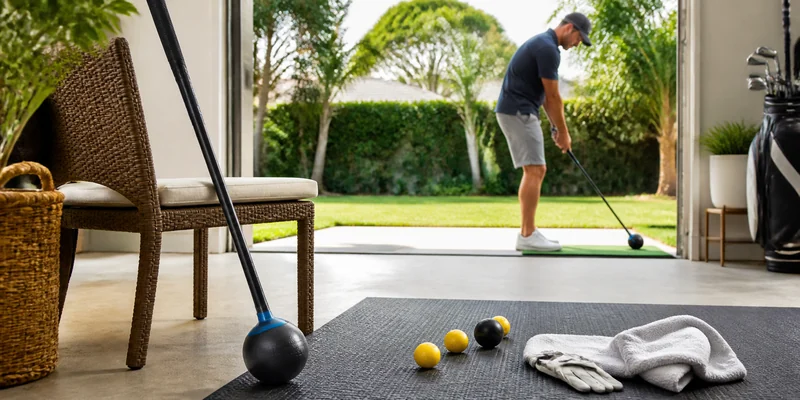
A weighted golf swing trainer is the oldest idea in golf practice: swing something heavier than your club, and your normal club feels lighter and your body learns to move in sequence. Generations of golfers did it with two irons held together or a donut weight slid onto a driver. Today the category is dominated by purpose-built flexible trainers with weighted heads, and the concept has picked up a modern counterpoint in light-stick speed training.
This guide explains what weighted trainers are actually designed to do, gives the honest version of both the benefits and the risks, and recommends the models worth owning. The short preview: the benefits are real but modest and habit-dependent, the risks are manageable with a gradual start, and nobody should expect a heavier stick to rebuild a swing on its own.
This article contains affiliate links. If you buy through them, we may earn a commission at no extra cost to you. Learn more.
Quick Answer
Should you buy a weighted swing trainer?
- Yes, if you want a warm-up and tempo tool: a flexible weighted trainer like the Orange Whip is designed to promote smooth sequencing and is the most-used aid in many golfers’ garages.
- Manage expectations on speed: heavy-only training is not a proven distance program, and modern speed systems deliberately mix light and heavy for that reason.
- Respect the load: start with short, smooth sessions and build up gradually, especially if you are new to swinging extra weight or have back or joint history.
What to Check Before You Buy
Weighted trainers look interchangeable in listings. These five rows are where they actually differ.
| What to check | Why it matters | What to look for |
|---|---|---|
| Shaft flexibility | Flexible shafts add tempo feedback; rigid ones just add weight | A whippy shaft that visibly lags on a rushed transition, unless you specifically want a rigid warm-up club |
| Counterweighting | A weighted grip end balances the swing feel and eases wrist strain | Trainers weighted at both ends swing smoother than head-heavy-only designs |
| Length and ceiling fit | Full-length trainers need full swing clearance | Shorter versions for indoor use; most golfers need roughly 9 to 10 foot ceilings for a full swing |
| Ball-striking option | Some trainers have a real club head, most do not | A club-head trainer if range or net practice keeps you motivated; a ball-end trainer for pure feel work |
| Grip quality | The trainer only builds habits if sessions feel like golf | A standard golf-style grip in decent rubber; owners mention worn or plasticky grips as the first thing that ages |
If you have not yet settled on the weighted family at all, our swing trainer guide compares it against speed sticks and handheld release trainers first.
The Honest Benefits
The best-supported use of a weighted trainer is rhythm and warm-up. Extra weight at the end of a flexible shaft punishes a quick, armsy move and rewards an unhurried sequence, so a few smooth swings genuinely rehearse the motion most golfers lose under pressure. Many golfers use one daily for exactly this, and as a pre-round warm-up the weighted trainer has decades of common practice behind it: slow swings that loosen the golf muscles and groove tempo before the first tee.
There is also a body-awareness benefit that owners consistently describe: the weight makes the club head’s position obvious throughout the swing, which helps golfers feel where the club actually is rather than where they assume it is. What the heavier stick does not reliably do on its own is add speed. Training research in speed sports generally points toward mixing lighter and heavier implements in structured protocols, which is exactly how systems like the one in our SuperSpeed Golf review are built. A weighted trainer is a feel and warm-up tool first, and honest sellers frame it that way.
The Honest Risks, and How to Manage Them
Swinging extra weight is a physical load your body may not be used to, and the category’s real risk is enthusiasm: buying a trainer and swinging it hard, long, and daily from the first week. The sensible pattern is the one used with any new training load. Start with short sessions of smooth, deliberate swings, stay well below full effort for the first weeks, and increase gradually. Soreness that lingers is a signal to scale back, not push through.
Two groups deserve an extra word. Golfers with existing back, shoulder, or elbow history should treat a weighted trainer like any new exercise and clear it with a medical professional first; nothing about a golf label makes added load risk-free. And juniors should use trainers sized for them rather than adult-length, adult-weight models. None of this is a reason to avoid the category, and it is the same advice printed in the fine print most buyers skip. It is simply the difference between a tool that helps and a purchase that backfires.
Our Top Weighted Trainer Picks
How we chose: we compared widely available weighted trainers on balance and build quality, the clarity of their tempo feedback, and how consistently golfers report still using them long after purchase. Selections rest on manufacturer information and recurring owner feedback themes, not hands-on testing of our own.
One reassurance: all three are established products with years of owner history, not this season’s infomercial.
🏆 Best Overall
The counterweighted, flexible benchmark of the category, designed to promote smooth tempo and full-body sequencing, with the balanced feel that comes from weighting both ends. The full story is in our Orange Whip review.

💛 Best Value
The same flexible-weighted concept at an entry price, well suited to warm-up duty and to finding out whether the habit sticks before spending more. Trade-offs covered in our SKLZ Gold Flex review.

🏌️ Best with a Real Club Head
A whippy weighted-feel training club you can hit actual balls with, for golfers who stay engaged when practice ends in a ball flight. Details in our Lag Shot review.

The Budget Route: Weighting the Clubs You Own
Before purpose-built trainers, golfers weighted their own clubs, and the accessory that made it possible still sells for a reason. A weighted donut ring slides over the shaft and sits against the hosel, turning any iron into a warm-up club in seconds. It offers none of the flexible-shaft feedback of the trainers above, but as a glove-compartment warm-up tool it is hard to argue with.
🍩 Best Add-On
The classic slide-on weight that converts your own iron into a warm-up club. No tempo feedback, maximum portability, minimal cost.

Using a Weighted Trainer Well
Frequency beats intensity in every owner account worth reading. A workable pattern for most golfers: a short block of smooth swings most days, always starting slow, plus a pre-round warm-up set. Focus on an unhurried transition and a balanced finish rather than effort; the weight does the strengthening quietly while the tempo work does the visible good. Keep sessions short enough that the last swing is as smooth as the first.
Location matters more than it seems. A trainer stored by the garage or back door gets swung; one in the trunk under the stroller does not. Check your swing clearance once with a slow rehearsal before the first real session, and if your only space is indoors with a normal ceiling, choose a shorter model or shift your indoor minutes to putting and release work instead, as laid out in our home practice guide.
Common Mistakes to Avoid
- Going hard in week one. The most common way to sour on the category is soreness from overdoing early sessions. Smooth and short first, heavier effort only gradually.
- Expecting distance from weight alone. Heavy-only swinging is a feel and warm-up method. Structured speed training mixes light and heavy implements for a reason.
- Buying full-length for a low-ceiling room. A cracked light fixture is the classic first-week story. Measure, or buy the shorter version.
- Treating it as a swing overhaul. A trainer rehearses a feel. Pattern changes still come from instruction and deliberate practice, not from the implement itself.
- Letting it become furniture. Pick a visible home for it and attach it to an existing habit, like swinging while the coffee brews. The trainer that gets seen gets swung.
Where to Go From Here
If your real goal behind the weighted trainer is distance, read our SuperSpeed Golf review before buying anything, because structured overspeed work is the purpose-built path. If your practice time is mostly indoors, pair whichever trainer you choose with the small-space routines in golf practice at home. And to see how the weighted family compares with release trainers and speed sticks side by side, the swing trainer guide is the overview.
Frequently Asked Questions
What does a weighted swing trainer actually do? It is designed to promote smooth tempo and sequencing by making a rushed swing feel obviously wrong, and it doubles as a warm-up tool. Golfers also report better awareness of where the club head is during the swing.
Do weighted trainers increase swing speed? Not reliably on their own. Speed development programs typically mix lighter and heavier implements in structured protocols; a weighted trainer’s proven role is feel and warm-up work.
How heavy should a swing trainer be? Heavy enough to feel the club head, light enough to swing smoothly with your normal motion. The established trainers in this guide sit in that range by design, which is safer than improvising with extreme weight.
Are weighted swing trainers safe for seniors? Many seniors use them, typically favoring smooth, slow swings and shorter models. The universal advice applies with extra weight: build up gradually and clear new training loads with a medical professional if you have back or joint history.
Can I just swing two clubs together instead? That is the traditional free version and it works as a basic warm-up. Purpose-built trainers add the flexible shaft feedback and balanced counterweighting that two irons cannot replicate.
The Bottom Line
A weighted swing trainer earns its place as a tempo and warm-up tool: honest, durable, and habit-friendly, with the Orange Whip as the benchmark and the SKLZ Gold Flex as the value route. It is not a distance program and not a swing overhaul, and the load deserves a gradual start. Buy one, park it where you can see it, and let short smooth sessions do the work.