Last updated: August 10, 2026
A backyard putting green is the practice upgrade that gets used the most and regretted the least. Putting is the part of golf that rewards frequent, low-effort repetition, and a green ten steps from the back door turns dead minutes, coffee brewing, kids napping, grill preheating, into strokes of practice.
The decision is not whether a green is nice to have; it is which kind. Options run from a roll-out mat you stow in the garage to a professionally installed turf green with contours and multiple cups. This guide sorts them by effort and permanence, flags what actually matters in artificial turf, and points to the products owners keep recommending.
This article contains affiliate links. If you buy through them, we may earn a commission at no extra cost to you. Learn more.
Quick Answer
What kind of backyard putting green should you get?
- For most yards, a weather-resistant putting green mat or turf kit in the 9 to 10 foot class offers the best ratio of realistic roll to effort: unroll it on a flat patio or lawn and putt.
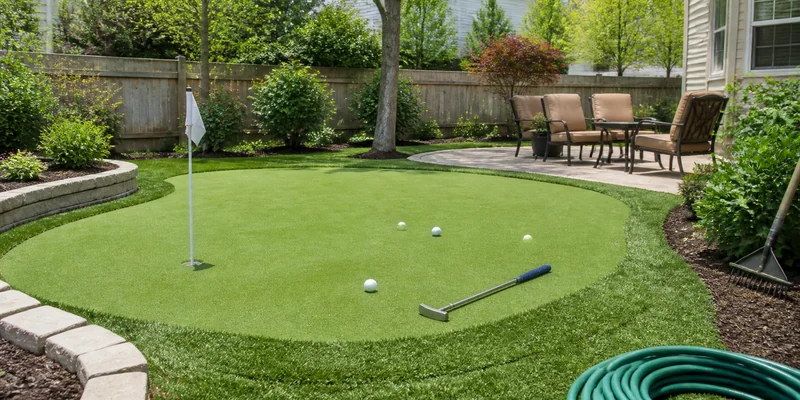
- Choose an installed turf green with a prepared base if you want true contours, multiple holes, and a green that lives outside year-round.
- Whatever the format, flatness decides everything. A green on uneven ground teaches misreads, not putting.
The Three Formats Compared
Every backyard green falls into one of three formats. Pick the row that matches your appetite for effort and permanence, and the rest of the shopping narrows itself.
| Format | Effort | Best for |
|---|---|---|
| Roll-out putting mat | None; unroll on patio or flat lawn | Renters, small yards, and anyone who wants to putt this weekend and store it after |
| Turf kit on prepared ground | A weekend; level ground, lay base, secure turf | A semi-permanent green with a more realistic roll and custom shape |
| Professionally installed green | Contractor project with graded base and drainage | Contours, multiple cups, and a course-like green that stays out year-round |
If your putting practice will mostly happen indoors after all, the equation changes; our putting mat guide and the indoor putting green roundup cover that side of the fence.
What Matters in Outdoor Putting Turf
Turf quality shows up in the roll. Good putting turf has short, dense fibers that let the ball roll true at a speed resembling a real green, and it holds that roll after rain and sun. Cheap turf reads more like carpet: the ball snakes, slows unevenly, and the surface flattens where you stand. Listings rarely admit which kind they are, but owner reviews mentioning true roll and consistent speed are the reliable tell.
Weather resistance is the second filter. An outdoor green needs UV-stable fibers, a backing that drains instead of puddling, and edges that stay down without curling. Greens marketed as indoor-outdoor vary widely here, so look for explicit mention of drainage holes and UV resistance rather than assuming.
Our Top Picks at a Glance
How we chose: we compared widely available putting greens and turf kits on roll quality, weather resistance, and how consistently owners report the surface staying flat and true outdoors over time. Selections lean on manufacturer specifications and recurring themes in customer reviews rather than any hands-on trial of our own.
A reassurance before the list: none of these require digging up the lawn. The installed-green route is covered afterward for those ready for it.
🏆 Best Overall
A putting green mat in the 10 foot class with a dense, true-rolling surface, cutout cups, and a backing that tolerates patio use. The format most backyards actually need.

💛 Best Value
A budget-friendly roll-out green that covers the essentials, a usable putting surface and included cups, for golfers testing whether the backyard habit sticks before spending more.

⭐ Upgrade Pick
A professional-style synthetic putting turf, sized to shape into a real green on a prepared base with cups placed where you want them. The weekend-project route to a green that stays outside.

Building the Short-Game Corner
A green alone trains one club. Add one net and the same corner trains the scoring shots from off the green too.
🎯 Also Great: A Chipping Net
A target net placed beside or behind the green for wedge work from real lies. Chip to the net, putt out on the green, and the corner becomes a full short-game station. Options compared in our chipping net guide.

Resist chipping directly onto mat-style greens, though: wedge strikes with real balls wear a putting surface fast, and most manufacturers advise against it. Chip to a net or a spare patch of lawn, and let the green do the job it was built for.
Site Prep: The Unglamorous Part That Decides Everything
Whatever format you choose, the ground underneath is the product you actually putt on. For roll-out mats, that means the flattest surface available, a patio or deck usually beats lawn, since grass compresses unevenly underfoot and telegraphs every lump through the mat. For turf kits, it means removing sod, leveling with a compacted base layer, and securing the edges, a genuine but very doable weekend of work.
Think about slope with intention. Perfectly flat is ideal for a first green; a slight, deliberate contour makes practice more interesting once your stroke is grooved. Accidental slope, the kind that comes from skipping prep, is the one to avoid, because a green that breaks randomly trains you to distrust your read.
Speed, Break, and Keeping Practice Interesting
Once the green is down, resist the urge to only hit the same comfortable six-footer. Many golfers rotate a few simple games: a ladder drill working back one step per made putt, a round of putts from every edge of the green, and a daily ten-putt test from one distance with the score written down. The written score is the trick; a number you track is a habit that survives, and it tells you honestly whether all this backyard convenience is being used.
Artificial greens also reward learning their personality. Every surface has a speed, and outdoor greens can roll slightly differently damp versus dry, so a two-putt warm-up to feel the day’s pace mirrors what you would do on a practice green before a round. If your home green runs faster or slower than your course, treat that as a feature: varied speeds train touch, and touch is the transferable skill.
Common Mistakes to Avoid
- Laying a mat on lumpy lawn and blaming the mat. The surface underneath is the green. Patio first, prepared base second, raw grass last.
- Buying indoor turf for outdoor life. Without UV stability and drainage, a green fades, stiffens, and puddles within a season.
- Chipping onto a mat-style green. Real-ball wedge strikes chew up putting surfaces. Chip to a net; putt on the green.
- Oversizing the first green. A well-used 10 foot green beats an ambitious project that stalls at the base-prep stage. You can always upgrade the footprint later.
- Ignoring storage for roll-up formats. Sun and standing water age any mat. Rolling it up after weekend sessions roughly doubles its lifespan.
Where to Go From Here
If the full-swing side of your backyard is still unbuilt, the backyard driving range guide covers the net-and-mat station that pairs naturally with a green. For the indoor winter version of putting practice, start with the putting mat guide. And if you want structure for all this new practice real estate, our home practice routines show how golfers fold a green into a weekly rhythm.
Frequently Asked Questions
Can a backyard putting green stay outside all year? Installed turf greens with proper drainage are built for it. Roll-out mats last far longer when stored between sessions, especially through winter and high summer.
How big should a backyard putting green be? A green in the 9 to 10 foot class covers the short putts that dominate scoring. Go larger only if you have genuinely flat ground and want lag-putt distance.
Do artificial greens roll like real greens? Good ones roll believably true, which is what putting practice needs. Speed varies by product, so consistency matters more than matching your course exactly.
Can I chip onto my putting green? Onto an installed turf green with a proper base, occasionally, yes. Onto a mat-style green, better not; wedge wear is the fastest way to ruin the surface.
Is an indoor putting mat a substitute? For stroke mechanics, absolutely, and it works year-round. Our indoor putting green guide covers the options for bringing practice inside.
The Bottom Line
The best backyard putting green for most golfers is a weather-resistant roll-out green in the 10 foot class on the flattest surface available, with a turf kit on a prepared base as the step up for a permanent green. Flatness beats size, drainage and UV resistance beat marketing photos, and a chipping net beside it completes the short-game corner.