Last updated: August 10, 2026
Good golf simulator turf and flooring is what separates a bay that looks like a golf studio from a hitting mat marooned on a concrete floor. Flooring is also more than looks: it quiets bouncing balls, softens the surface underfoot, protects clubs dropped mid-session, and can add a putting surface that makes the sim room useful even when the projector is off.
This guide covers the practical options for a simulator room floor: turf rolls, interlocking tiles, putting-friendly surfaces, and the underlayment that makes concrete livable. It also points to the products most home builders actually use, from budget foam tiles to full-room turf.
This article contains affiliate links. If you buy through them, we may earn a commission at no extra cost to you. Learn more.
Quick Answer
What flooring works best in a golf simulator room?
- Short-pile golf turf over a thin foam or rubber underlay is the standard: it deadens ball bounce, feels right underfoot, and blends the hitting mat into the room.
- Interlocking foam or rubber tiles are the budget route, quick to lay in garages and basements and easy to take back up.
- Want double duty? Choose a putting-speed turf for part of the floor and the sim room practices short game all week.
Flooring Options Compared
Every simulator floor is some mix of the four approaches below. Most finished bays combine two of them.
| Option | Strengths | Watch out for |
|---|---|---|
| Golf turf roll | Seamless golf-room look, deadens bounce, can extend into a putting area | Needs a flat subfloor and careful seam work; quality varies widely between rolls |
| Interlocking foam or rubber tiles | Cheap, fast, forgiving on concrete, easy to replace one damaged tile | Soft foam dents under enclosure legs; not a hitting surface by itself |
| Putting-speed turf | Adds real practice value to the same square footage | Roll speed depends on pile and underlay; test a small area before committing the room |
| Underlayment layer | Softens concrete, quiets the room, evens small subfloor flaws | Too thick or too soft underlay makes standing surfaces feel spongy |
The hitting surface itself is a separate purchase with its own standards, covered in our simulator mat guide. The floor’s job is everything around that mat.
Turf, Tiles, or Both: Picking Your Approach
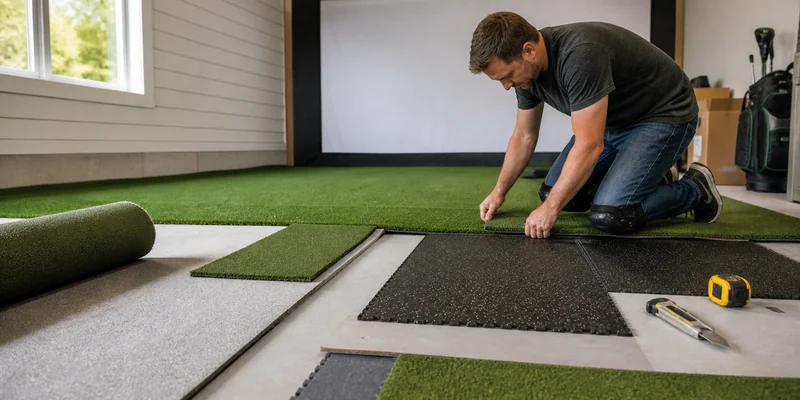
Full turf is the choice when the room is permanently a golf room. A short-pile turf roll across the space makes the mat sit flush, gives mishits and dropped balls a quiet landing, and photographs like a commercial studio. The trade-offs are up-front effort, flat-subfloor requirements, and the fact that turf glued or taped down is semi-permanent.
Tiles are the choice when flexibility matters more than looks. Interlocking rubber or foam tiles go down in an hour over garage concrete, tolerate cars and bikes returning in the off-season, and come back up without a trace, which renters appreciate. The hybrid approach is common and sensible: tiles across the room for comfort, with a turf section forming the hitting zone and a putting strip. If the room doubles as a den or hosts guests, the flooring plan belongs to the larger design questions our simulator room ideas guide explores.
Our Top Turf and Flooring Picks
How we chose: we compared widely available turf rolls, tile systems, and underlays on surface quality, ease of installation, and how consistently owners report them lying flat and wearing well in golf rooms. Selections lean on manufacturer specifications and recurring themes in customer reviews rather than any hands-on trial of our own.
Sizes in this category vary by listing, so treat each pick as a product type and match the dimensions to your room.
🏆 Best Overall
A short-pile golf practice turf roll dense enough to walk and putt on, the standard base layer for a finished simulator room. Owners consistently mention how much it quiets ball bounce compared with bare floors.

💛 Best Value
A budget-friendly artificial turf roll that covers serious square footage for the money, a common choice for garages where the floor needs to be golf-green rather than golf-perfect.

🧩 Best Tile System
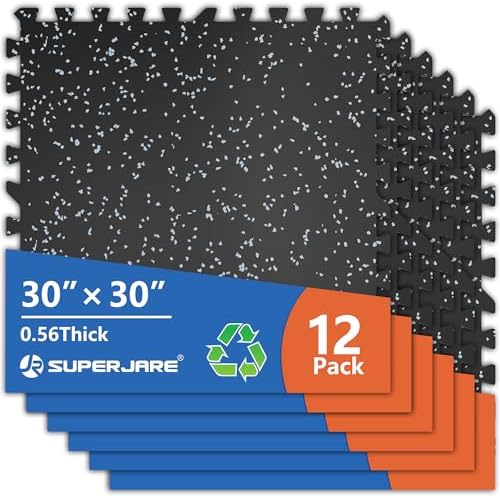
Interlocking rubber-foam floor tiles that lay over concrete in an afternoon, cushion the whole room, and lift back out cleanly, the renter-proof route to a comfortable bay.
Picks for Double-Duty Floors
If the floor should earn its keep beyond full swings, these two turn square footage into short-game practice.
⛳ Best Putting Addition
A putting-speed green or mat that lives along one side of the bay, so the room practices three feet putts all week; the dedicated category lives in our putting mat guide.

🔇 Best Underlay
A thin foam underlayment roll that goes beneath turf to soften concrete and even out small imperfections, the invisible upgrade owners mention most after long sessions.

Installation and Living With It
Preparation beats product. Sweep and degrease the subfloor, let turf rolls relax flat for a day before fitting, and dry-lay everything before any tape or adhesive appears. Seam turf sections along the room’s length so joints run away from the eye, and use double-sided turf tape rather than full glue if you may ever want the floor back. Under enclosure legs and heavy furniture, place load-spreading pads so soft tiles do not dent permanently.
Think about transitions as well. Where turf meets bare floor or a doorway, a beveled edge strip prevents the trip hazard and the curling corner that otherwise appears within months. If the launch monitor sits on the floor, cut its position cleanly into the turf plan rather than perching it on top, so the unit sits level and stays put between sessions.
Day to day, a turf floor asks for little: vacuum grit that would otherwise grind into fibers, brush high-traffic lanes occasionally, and check seams yearly. In garages, remember the floor’s second life; if a car returns seasonally, tiles handle that future better than glued turf. Keep a small offcut of whatever you install, since patching a burn or tear later is far easier with matching material on hand.
Common Mistakes to Avoid
- Hitting full shots off room turf. Flooring turf is not a hitting surface; it lacks the density and cushioning of a real mat. Keep strikes on the simulator mat and let the floor do floor jobs.
- Skipping the underlay on concrete. Turf directly on concrete looks right and feels wrong. A thin underlay changes the comfort of the entire room for a small line item.
- Laying flooring before the big components. Enclosure legs, mat position, and any floor-mounted launch monitor placement should be decided first, so cutouts and wear zones land where you planned them.
- Choosing long-pile decorative grass. Landscape turf swallows balls and rolls terribly. Short, dense pile is the golf answer indoors.
- Ignoring moisture in basements and garages. Trapped damp under flooring invites mildew. Address moisture first, or choose open tile systems that breathe.
Where to Go From Here
The floor frames everything else in the bay. The hitting surface question is settled in our simulator mat guide, the walls and screen in the enclosure guide, and if the room plan itself is still forming, simulator room ideas is the drawing board. For the complete build from launch monitor to software, start at best golf simulator for home.
Frequently Asked Questions
Can I hit golf balls directly off simulator room turf? Occasional chips are fine on dense turf, but full swings belong on a proper hitting mat. Flooring turf lacks the layered construction that protects your joints and your clubs.
What thickness of turf is best for a golf room? Short, dense pile is the working answer: it rolls putts acceptably, sits flat, and blends with hitting mats. Long decorative pile fights every one of those jobs.
Do I need underlayment beneath golf turf? Over concrete, it is strongly recommended: it softens the floor, quiets ball drops, and evens minor imperfections. Over wood or carpet-padded subfloors it is optional.
Are foam tiles good for a golf simulator room? Yes, especially in garages and rentals. They cushion well and remove cleanly. Just spread the load under enclosure legs and keep full-swing strikes on the mat, not the tiles.
Can part of the floor be a real putting green? Absolutely, and it is one of the best uses of leftover square footage. A putting-speed surface along the bay turns dead space into daily short-game practice; see our indoor putting green guide for the options.
The Bottom Line
The best golf simulator flooring is short-pile turf over a thin underlay for permanent rooms, interlocking tiles for flexible ones, and a hybrid of both for most real garages. Plan the floor after the big components, keep full swings on a proper mat, and consider a putting strip so the room works even with the projector off.