Last updated: August 10, 2026
The golf simulator mat is the component your body actually touches on every single swing, and it shows up in places a screen or projector never will: your wrists, your elbows, and the honesty of your practice. A harsh mat punishes good contact and quietly teaches you to pick the ball clean; a forgiving one lets you swing the way you would off grass, session after session.
This guide covers what separates simulator-grade mats from door-mat turf: hitting surface construction, thickness and shock absorption, stance options, and durability where your clubs strike thousands of times. It then points to the mats that come up most often in home builds, from budget workhorses to premium surfaces with replaceable hitting strips.
This article contains affiliate links. If you buy through them, we may earn a commission at no extra cost to you. Learn more.
Quick Answer
Which golf simulator mat should you buy?
- For regular practice, buy a mat with a dense, forgiving hitting surface and real cushioning underneath; your joints feel the difference within weeks.
- A 5 by 4 foot class mat with room for ball and feet suits most bays; larger stance mats or turf surrounds make the setup feel like one floor.
- If you practice often, favor mats with a replaceable hitting strip or insert so you renew the worn spot instead of the whole mat.
What to Check Before You Buy
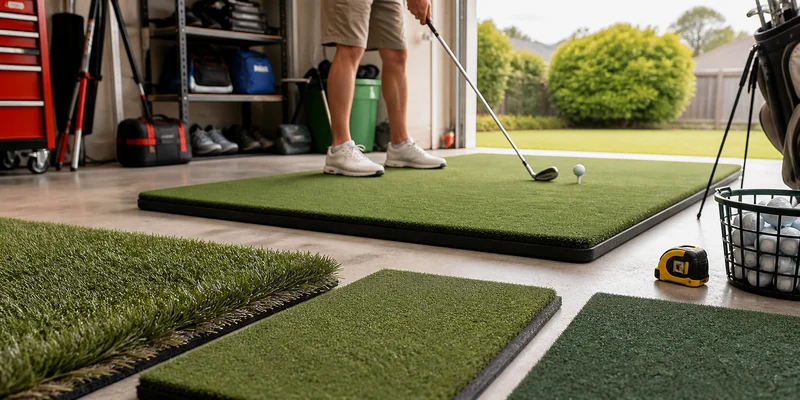
Mat listings love glamour shots of green turf. The table below is what to actually read for.
| What to check | Why it matters | What to look for |
|---|---|---|
| Hitting surface | Determines feel and wrist comfort | Dense multi-layer turf that lets the club slide through impact; avoid thin, hard carpet-style surfaces |
| Cushioning base | Absorbs the shock of descending strikes | Foam or rubber backing with real thickness; the mat should have give when you press a thumb into it |
| Size and stance room | You need to stand level with the ball | Around 5 by 4 feet fits ball and stance for most golfers; smaller hitting-strip mats need a separate stance solution |
| Replaceable insert | Wear concentrates in one strike zone | Mats with swappable hitting strips extend life dramatically for frequent practicers |
| Tee options | Mats and wooden tees rarely mix well | Rubber tee compatibility or tee holes; dense surfaces usually hold a regular tee poorly |
| Edge and backing | Mats creep and curl on smooth floors | Heavy non-slip backing and finished edges that lie flat from day one |
If the mat is part of a bigger floor plan, our turf and flooring guide covers extending the surface across the room. And for outdoor or net-based practice, the broader golf hitting mat guide is the right starting point.
Why Mat Quality Is a Comfort Issue First
The most repeated theme in owner feedback about cheap mats is not durability, it is discomfort. A thin mat over concrete returns the energy of every descending strike back up the club and into your wrists and elbows, and simulator practice multiplies that by hundreds of balls a week. Golfers report that dense, cushioned mats let them practice longer and more often simply because nothing aches afterward.
The second issue is feedback honesty. Very hard surfaces cause the club to bounce into the ball on slightly heavy strikes, turning a swing flaw into a decent-looking result. A quality mat lets the club interact with the surface more like turf, so what your launch monitor reports reflects what your swing actually did. Understanding those numbers is its own skill, one our launch monitor numbers guide unpacks.
Our Top Simulator Mat Picks
How we chose: we compared widely available simulator mats on surface quality, cushioning, size, and how consistently owners report them staying flat and comfortable through heavy use. Selections lean on manufacturer specifications and recurring themes in customer reviews rather than any hands-on trial of our own.
Each pick gives you room to stand level with the ball, because a mat you perch beside on bare concrete is only half a mat.
🏆 Best Overall
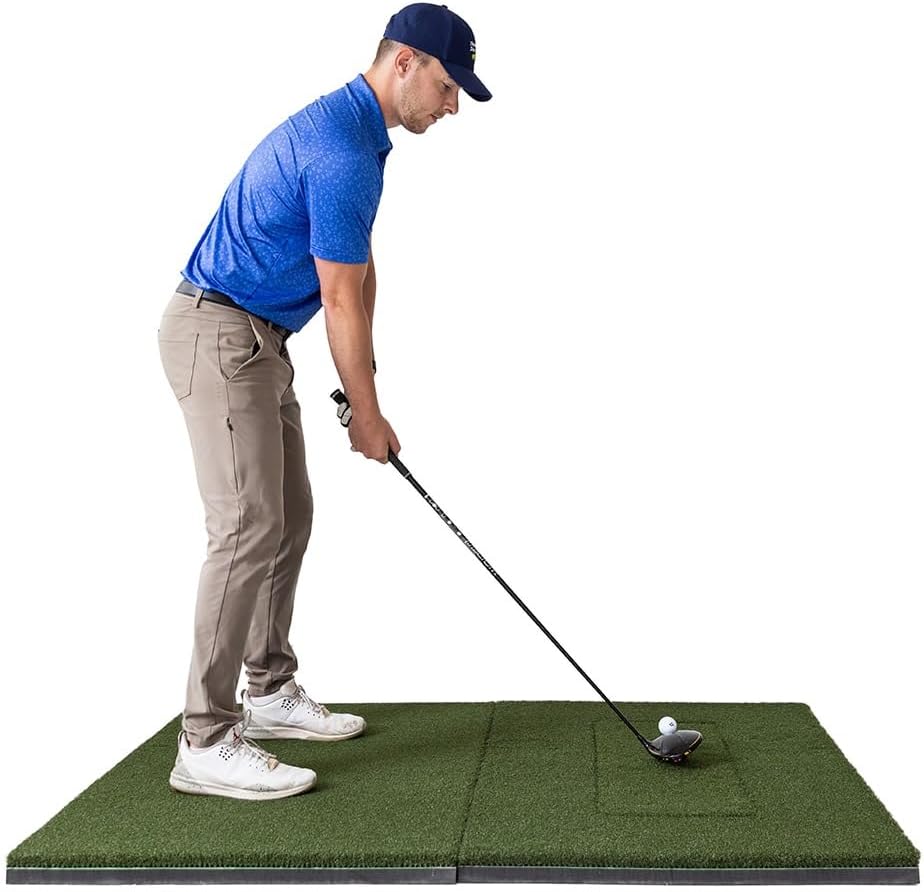
A 5 by 4 foot class mat with a dense hitting surface, cushioned backing, and space for ball and stance together. Reviews consistently mention comfortable long sessions and a surface that holds up to irons.

💛 Best Value
A budget-friendly mat with a respectable turf surface and included rubber tees that covers a starter bay without embarrassment, the common pick when the launch monitor ate the budget.

⭐ Upgrade Pick
A premium simulator mat with a replaceable hitting strip set into a large stance surface, built for daily practice where renewing the strike zone beats replacing the mat.
Picks by Situation: Tight Budgets and Big Bays
Two setups sit outside the standard recommendation and deserve their own answers.
📦 Best Compact Option
A smaller hitting mat that pairs with a separate stance mat or turf flooring, useful when the bay is narrow or the mat has to store away between sessions.

🟩 Best for Full-Floor Builds
A large turf-style mat or roll that blends the hitting area into the room’s flooring, the approach our turf and flooring guide builds around.

Placement, Alignment, and Mat Care
Place the mat so the hitting zone lines up with the center of your screen and your launch monitor’s required distances; monitor placement is fussier than mat placement, so set the monitor first and bring the mat to it. On smooth floors, add a rubber underlay or gripping pad if the mat creeps, because a mat that shifts a half inch per session quietly changes your alignment. Leave identical stance room on both sides if left- and right-handers share the bay.
Care is mostly rotation. Move the ball position around the legal strike area, spin the mat occasionally if its design allows, and brush the turf to stand the fibers back up. Vacuum grit off the surface now and then; embedded debris wears both mat and wedges. When a permanent shiny strike patch develops, that is the signal to swap the insert or plan the replacement.
Common Mistakes to Avoid
- Spending everything on the launch monitor and nothing on the mat. The mat is the component you physically feel every swing. Budget it like it matters, because your wrists will invoice you either way.
- Buying a hitting strip with nowhere to stand. Standing below or above ball level changes your swing plane. Match ball height and foot height, whether by mat size or a stance extension.
- Using wooden tees in a dense mat. Most simulator mats hold rubber tees, not wooden ones. Fighting the mat with a hammer helps neither.
- Ignoring the floor underneath. A great mat over bare concrete still transmits shock. A thin underlay or turf surround softens the whole system.
- Never rotating the strike zone. One ball position drills a dead spot in months. Spreading wear across the surface can multiply mat life.
Where to Go From Here
With the mat settled, the floor around it is the next comfort upgrade, covered in the turf and flooring guide. The wall you are hitting toward is handled in the enclosure guide and the impact screen guide. And if you are still assembling the whole bay, the best golf simulator for home guide puts every component in order.
Frequently Asked Questions
What size mat do I need for a golf simulator? The popular 5 by 4 foot class fits the ball and a full stance for most golfers, which is why it dominates home bays. Smaller mats work when paired with a stance mat or surrounding turf at the same height.
Are thick golf mats better? Generally yes, up to a point. Thickness usually means cushioning, which protects joints and gives more honest turf interaction. What matters most is the combination of a dense hitting surface and a shock-absorbing base.
Can I use a simulator mat outdoors? Many mats handle garage and covered outdoor use fine, but sun and moisture age turf faster. For a dedicated outdoor setup, see our hitting mat guide for weather-friendly options.
How long does a simulator mat last? It depends on volume and rotation habits. Owners report years from quality mats when they spread wear across the surface, and replaceable-strip designs extend that further by renewing only the strike zone.
Do launch monitors work with any mat? Yes, the mat does not interact with the monitor’s measurement. What matters is keeping ball position consistent with the monitor’s required placement, which a marked or consistent mat makes easier.
The Bottom Line
The best golf simulator mat pairs a dense, forgiving hitting surface with real cushioning and enough room to stand level with the ball. Frequent practicers should favor replaceable-strip designs, and every buyer should rotate the strike zone from day one. It is the least glamorous purchase in the bay and the one your body thanks you for most.