Last updated: August 10, 2026
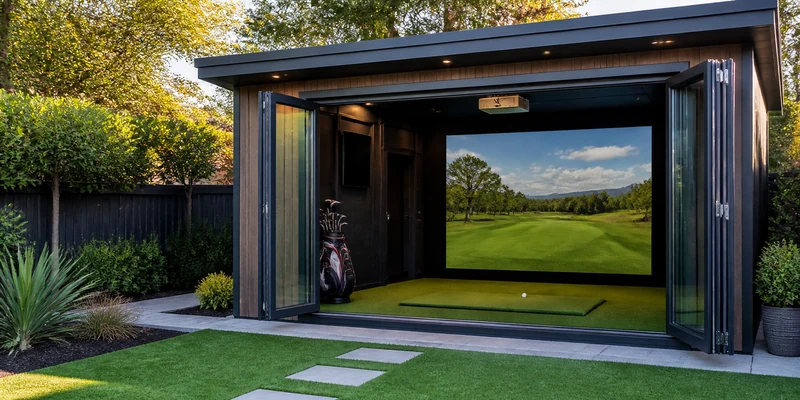
A golf simulator shed is the dream version of home golf: a building in the backyard that exists for one purpose, with no car to move, no household traffic, and no negotiation over the projector. Golfers who make the leap consistently describe it as the setup they use the most, precisely because the room is always ready.
It is also the build with the most planning homework, because a shed is a small building before it is a golf room. Height, insulation, ventilation, moisture, and power all need answers before the first swing. This guide walks the decisions in build order, from choosing or adapting the structure to the components that furnish it, based on manufacturer specifications and the recurring lessons shed builders share, not on testing of our own.
This article contains affiliate links. If you buy through them, we may earn a commission at no extra cost to you. Learn more.
Quick Answer
Can a backyard shed work as a golf simulator room?
- Yes, if the interior clears a full swing: most golfers need roughly 9 to 10 ft of ceiling, which usually means a tall barn-style or purpose-built shed rather than a standard garden model.
- Insulation, ventilation, and a safe heat source decide whether the room is usable year-round; electronics and impact screens both prefer a dry, temperate space.
- Once the building is right, a complete enclosure package plus a launch monitor and projector turns it into a studio; plan power for all three.
The Shed Checklist, in Build Order
Work through this table top to bottom. Everything in it is decided before the golf gear arrives, and each row is cheaper to fix on paper than after the build.
| Stage | The question | What to look for |
|---|---|---|
| Structure and height | Does a full swing fit? | Roughly 9 to 10 ft of clear interior height for most golfers; barn-style and studio sheds reach this, many garden sheds do not. Swing your driver slowly at the planned hitting spot before committing |
| Footprint | Is there depth and width for screen, swing, and monitor? | Check the listed space requirements of your launch monitor and enclosure; radar units want room behind the ball |
| Permits | Does local code apply? | Rules on outbuildings, electrical work, and size vary by area; check before building or wiring anything |
| Insulation and moisture | Will gear survive the seasons? | Insulated walls and roof, a vapor barrier appropriate to your climate, and a dry floor; damp is the enemy of screens and electronics |
| Power | Can it run projector, monitor, heat, and light? | A properly installed circuit from the house, done to code, ideally with more outlets than you think you need |
| Climate control | Is it usable in January and July? | A safe heat source sized for the space, ventilation or a fan for summer, and attention to the operating ranges listed for your electronics |
Marginal on height or footprint? Read the room dimensions guide before ordering a building; it covers how to judge edge cases for real swings.
Choosing the Building: Tall Beats Big
The counterintuitive rule of shed simulators: height matters more than floor area. A compact but tall shed can host a comfortable setup, while a sprawling low one cannot host any setup at all. That points most builders toward barn-style roofs, studio sheds, or custom builds where the ridge line gives the middle of the room its clearance, exactly where the swing happens.
If you are adapting an existing shed, be honest about the measurement at the hitting position rather than the peak. Roof framing, lights, and fans all steal inches. Builders who convert existing structures often raise the ceiling by exposing rafters or choose to hit along the tallest axis of the room. When the building itself becomes the project, our DIY golf simulator walkthrough covers the full sequence from empty room to first swing.
Insulation, Ventilation, and Heat: The Year-Round Question
A shed that is only usable in spring is an expensive way to practice in spring. Insulation is what converts the building into a four-season golf room, and it does double duty: it keeps winter sessions comfortable and protects screens, mats, and electronics from the condensation cycles that uninsulated outbuildings go through. Check the storage and operating ranges listed in your launch monitor’s documentation and treat them as the room’s design spec.
Ventilation earns its place in every season. A swing is exercise, projectors produce heat, and a sealed small building gets stuffy fast; a vent pair or a quiet extractor fan solves it cheaply. For winter heat, use a heater appropriate for the size and type of the space, follow its safety instructions, and keep it far from netting, screen material, and the swing path. Combustion heaters need dedicated ventilation, which is a strong argument for electric heat in a small sealed room.
Our Top Picks for a Shed Build
How we chose: we compared components on fit for small dedicated rooms, tolerance for outbuilding conditions, and how consistently owners report reliability over time. Specifications and owner feedback patterns drive the picks, not in-house trials.
🏆 Best Overall
A complete enclosure package with impact screen, frame, and side barriers that furnishes the whole hitting end of the shed in one purchase. Match the listed frame dimensions to your interior walls and leave the recommended clearance behind the screen.

⛳ Best Launch Monitor for the Space
A portable radar unit that anchors the setup and also travels to the range in summer. It wants a few feet behind the ball, which a shed laid out along its long axis can provide; check the listed placement distances against your floor plan. Full course play requires a Garmin Golf membership tier.

💛 Best Value
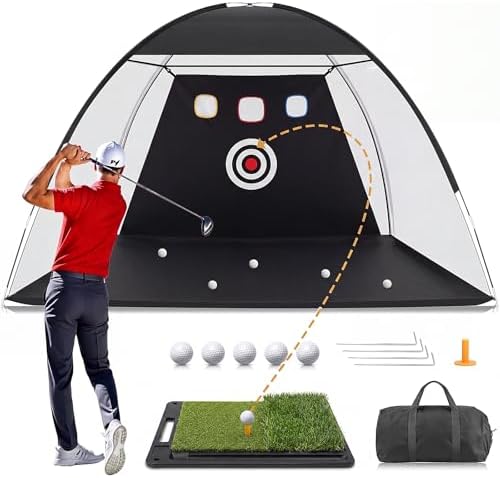
A net and mat pairing that gets the shed swinging before the full studio budget exists. The net later becomes side or backup protection when a screen moves in, so nothing is wasted by starting here.
Furnishing the Room: Screen, Floor, and Light
With the building sorted, the golf part is refreshingly simple. The screen end takes the enclosure; the floor takes a thick hitting mat at the strike zone, with turf or rubber tiles elsewhere so the room feels finished and bounced balls stay quiet. Wall-to-wall options are compared in the turf and flooring guide, and dedicated enclosure choices in the enclosure guide.
Lighting is worth a deliberate choice rather than a bare bulb: even, indirect light helps camera-based monitors read the ball and stops the projector image washing out. Position fixtures out of the swing path and off the screen’s sightline. A small shed rewards ceiling-hugging LED panels over anything that hangs.
🎯 Best Projector for a Small Room
A short throw projector designed to fill a screen from close range, which is exactly what a shed demands; mounted overhead, it stays out of the swing and off your shadow line. Check the throw ratio against your screen distance before buying.

🧰 Best Flooring Upgrade
Rolled practice turf to run from the hitting mat toward the screen, turning the plywood floor into a practice room. Owners consistently mention that finished flooring is what makes a shed feel like a studio instead of a storage building with a net in it.

Common Mistakes to Avoid
- Buying the shed before swinging in one. Showroom models exist to be stood in. Take a driver, ask permission, and swing slowly. Height that looks fine on a spec sheet can feel tight under a rafter.
- Skipping insulation to save budget for gear. The uninsulated version costs you the winter and puts condensation on your electronics. It is the least glamorous spend and the most important one.
- Running power on a hope and an extension cord. A projector, monitor, heater, and lights deserve a proper circuit installed to code. This is also where local permit rules most often apply.
- Ignoring the listed clearance behind the impact screen. Screens need space to absorb a shot. Hard against the back wall, they wear fast and hit loud.
- Forgetting software costs in the total. Course play typically needs a Garmin membership tier, a GSPro license, or an E6 Connect plan. Budget the building, the gear, and the subscription as one number.
Where to Go From Here
Before finalizing any purchase list, sanity-check the budget tiers in the simulator cost breakdown and compare your component picks against the best golf simulator for home hub, where the shed route sits alongside garage and basement builds. When the room is up and you start chasing numbers, launch monitor numbers explained turns the data into practice decisions.
Frequently Asked Questions
How tall does a golf simulator shed need to be? Most golfers need roughly 9 to 10 ft of clear interior height for a full driver swing. Test your own swing at the actual hitting position, since framing and fixtures reduce the usable number.
Do I need a permit for a simulator shed? Possibly. Outbuilding size, placement, and electrical work are regulated differently by area, so check local rules before building or wiring. The golf gear itself needs no approval.
Can electronics stay in an unheated shed? Check the storage temperature range in each device’s documentation. Many owners in cold climates insulate the shed, heat it for sessions, and store the launch monitor indoors in extreme weather.
What size shed works for a simulator? One where the interior clears your swing in height and width, with depth for the screen, the ball flight, and the monitor’s listed placement. Tall and modest beats large and low; the room dimensions guide shows how to judge it.
Is a shed better than a garage for a simulator? It is more dedicated and always ready, but costs more to prepare. A garage wins on existing power and shelter; a shed wins on never having to pack away.
The Bottom Line
A golf simulator shed rewards planning in the right order: a building tall enough for a real swing, insulation and ventilation to make it four-season, power installed to code, and only then the enclosure, monitor, and projector. Build the room first and the golf part is easy.