Last updated: August 10, 2026
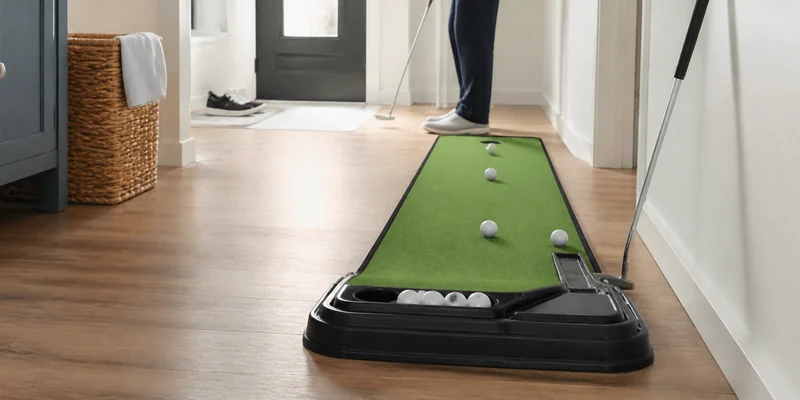
A putting mat with ball return solves the least glamorous problem in home practice: the walking. On a normal mat, every made putt ends with you shuffling forward, bending down, and resetting, and that small tax quietly decides how long your sessions last. Return designs send the ball back to your feet, and owners of these mats consistently say the same thing: they simply putt more.
This guide covers how the return mechanisms differ, what to check before buying, and the mats that keep earning recommendations, from gravity-track designs to simple ramps and powered return cups. If you are still deciding whether a return mat is even the right category, our putting mat guide compares all the styles side by side.
This article contains affiliate links. If you buy through them, we may earn a commission at no extra cost to you. Learn more.
Quick Answer
Which ball return putting mat should you buy?
- For most golfers, a gravity-return mat in the 9 foot class is the sweet spot: no batteries, nothing to break, and the ball arrives back at your feet after every made putt.
- Check the miss behavior, not just the make behavior: good designs also collect or return near misses instead of scattering them around the room.
- Powered return cups are fun and work on any surface, but the mechanical simplicity of a ramp or track design tends to age better.
What to Check Before You Buy
Return mats add moving parts to a simple product, so the checklist grows a little. These are the points that separate keepers from returns.
| What to check | Why it matters | What to look for |
|---|---|---|
| Return type | Determines reliability and what happens to misses | Gravity tracks and ramps for simplicity; powered cups only if you accept batteries and a single target |
| Miss handling | Chasing missed putts cancels the whole benefit | Raised edges, catch zones, or backstops that keep misses on or near the mat |
| Surface and roll | The return means nothing if the roll is dishonest | A smooth, consistent surface golfers compare to a medium-fast green |
| Uphill cup design | Most return mats raise the cup on a slope | A gentle, consistent ramp; owners should confirm putts do not need to be slammed to reach the hole |
| Track alignment | A skewed return track feeds balls to your ankle, not your putter | Solid construction and feedback confirming the track stays straight in use |
| Noise | Returning balls make noise on hard floors | Softer track materials and quieter operation if you practice near others |
The Uphill Truth About Return Mats
Almost every return design raises the cup above floor level, because gravity needs a slope to send the ball home. That means the last stretch of your putt plays slightly uphill, and a firm pace is rewarded more than a dying roll. Purists sometimes hold this against the category, but there is a practical upside: putts struck with confident pace are a habit most amateurs need anyway, and owners rarely report trouble adjusting back to flat greens.
The honest framing is this: a return mat is a repetition machine first and a green simulation second. If you want the truest possible surface, the premium turf mats in our main guide win. If you want to hit five times as many putts this month as last month, the return category wins, and it is not close.
Our Top Picks at a Glance
How we chose: we compared widely available ball return mats on return reliability, roll quality, miss handling, and build durability, leaning on manufacturer specifications and recurring themes in owner reviews rather than any hands-on trial of our own.
Every pick here uses a mechanical return, no batteries required for the core function, because moving parts that cannot fail are the kind that keep a mat in service for years.
🏆 Best Overall
The polished flagship of the category: a smooth, quick surface, center alignment track, two hole sizes for scaling difficulty, and a return track that owners consistently describe as reliable. Our full Perfect Practice review digs into the details.

💛 Best Value
A gravity-return mat that covers the essentials, a consistent roll, a raised cup with return track, and printed alignment help, at a price that makes it an easy first return mat.

🔁 Best Classic Design
The long-running design many golfers grew up seeing: a narrow runner with a raised cup, gravity return, and a visible ball path that shows pushes and pulls instantly. Simple, durable, and proven.

More Good Options for Specific Situations
Two more picks round out the category for particular setups.
🏡 Also Great
A wider return design with multiple target zones, giving you some of the angle variety of a roll-out green without giving up the return convenience.

⚡ Best Powered Return
A battery-powered return cup that kicks made putts back across any carpet or mat. Not a mat at all, strictly speaking, but the cheapest way to add return convenience to a surface you already own.

Setup and Living With It
Placement rules are the same as any mat, with one addition: the return track needs a clear, straight run, so avoid doorways and foot traffic that will nudge it out of line. Hard floors give the truest roll and the fastest returns; on carpet, expect the ball to arrive back with less energy. Give a rolled mat a day or two to settle flat, and check periodically that the cup ramp has not crept sideways from repeated impacts.
To keep sessions useful rather than hypnotic, add structure: sets of ten from each distance marking, or a streak game where three misses reset the count. The routines in our home practice guide slot perfectly into the rep volume these mats generate, and an office-friendly version of the same idea covers workday practice.
Common Mistakes to Avoid
- Ignoring miss behavior. A mat that returns makes but scatters misses still has you crawling under the desk. Check what owners say about where missed putts end up.
- Expecting a flat-green feel. The raised cup means the finish plays slightly uphill by design. Buy the category for reps, not for simulation.
- Choosing powered over mechanical without a reason. Batteries die and motors jam. Unless you need a return on existing carpet, gravity does the job forever.
- Slamming putts to reach the cup. If firm pace becomes ramming, the practice sours. A well-designed ramp needs confidence, not violence; reviews reveal which is which.
- Buying longer than your straight run. The track needs its full length in a straight line. Measure the actual lane, not the room’s diagonal.
Where to Go From Here
If the uphill cup bothers you and realism is climbing your priority list, the premium turf options in our PrimePutt review are the natural next step. If you have the floor space for something bigger, the indoor putting green guide covers wide roll-out surfaces. And if this is a present for the golfer in your life, return mats are a reliably safe pick in our golf gift guide.
Frequently Asked Questions
How does a ball return putting mat work? Most use gravity: the cup sits on a raised ramp, and made putts drop into a track that slopes back toward your feet. Powered versions use a battery-driven kicker instead.
Do ball return mats change how putts feel? Slightly. The final stretch plays a touch uphill because of the raised cup, which rewards confident pace. Owners generally report adjusting between mat and course without trouble.
Are powered return cups worth it? As an add-on to carpet or a mat you already own, they are a cheap convenience. As a primary trainer, a mechanical mat with a proper surface teaches more.
What length should I buy? The 9 foot class fits most hallways and offices and covers the score-deciding distances. Only go longer if you have a genuinely straight, protected lane for the track.
Which ball return mat is best overall? For most golfers, the flagship in our Perfect Practice review leads the category, with value designs from Champkey and SKLZ close behind at friendlier prices.
The Bottom Line
A putting mat with ball return is the highest-volume practice tool in the putting category: gravity designs in the 9 foot class deliver endless reps with nothing to break, and good miss handling is what separates the keepers. Accept the slightly uphill cup as the price of convenience, add a simple practice structure, and the putt count takes care of itself.