Last updated: August 10, 2026
The Lag Shot answers the most common complaint about tempo trainers: you cannot hit anything with them. Its pitch is a real club head mounted on an extremely flexible shaft, so the same whippy feedback that teaches rhythm also lets you strike actual golf balls at the range, in the yard, or into a net. The brand sells versions built around different club types, with the iron model as the usual starting point.
This review looks at what that hybrid approach is designed to do, where the whippy-shaft concept helps and where it can mislead, and which golfers should choose a pure tempo trainer instead. It is an assessment of the product design and recurring owner feedback, not a hands-on test.
This article contains affiliate links. If you buy through them, we may earn a commission at no extra cost to you. Learn more.
Quick Answer
Is the Lag Shot worth buying?
- Yes, if you want a trainer you can hit real balls with: the ultra-flexible shaft is designed to promote lag, loading, and smooth transition, and the club head keeps practice connected to actual shots.
- The whippy shaft rewards patience from the top; rush the transition and the strike tells you immediately.
- Choose a pure tempo trainer instead if you mainly want a warm-up tool, or a speed system if distance is the specific goal.
Lag Shot at a Glance
The concept sits halfway between a training aid and a practice club, which is exactly its appeal.
| Category | What to know |
|---|---|
| Type | Whippy-shaft training club; real balls can be hit with it |
| Design | Very flexible shaft with a genuine club head; visually distinct blue shaft |
| Designed to promote | Lag, shaft loading, and an unhurried transition you can feel and then verify at impact |
| Versions | Offered around different club types; the iron version is the common first buy |
| Space needed | Full swing room, plus somewhere to hit: range, yard, or a net |
| Ideal for | Golfers who cast or rush from the top and want ball-flight confirmation |
| Less ideal for | Pure warm-up use, small indoor spaces, or dedicated speed training |
What the Lag Shot Gets Right
The ball is the feedback. With a pure tempo trainer you can only feel whether a swing was smooth; with the Lag Shot the strike and flight confirm it. Because the shaft is far softer than any real club, an early, aggressive move from the top throws the club head badly out of sync and produces an obvious mishit, while a patient transition lets the shaft load and square up. Many golfers use it in short blocks at the range, alternating a few Lag Shot swings with their own club.
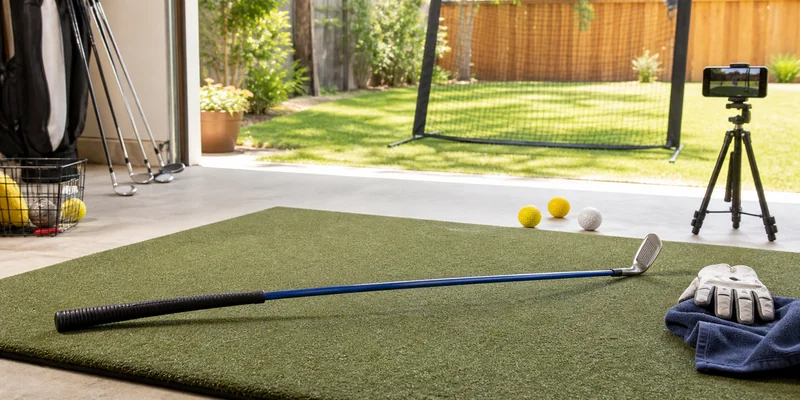
The second strength is engagement. Hitting balls is simply more interesting than swinging air, and owner feedback often mentions that the Lag Shot gets used where previous aids gathered dust. Pairing it with a hitting net turns a backyard or garage bay into a genuine practice station for it, a setup our home practice guide covers in detail.
Where It Falls Short
The whippy shaft is a teaching exaggeration, and that cuts both ways. Some golfers translate the feel back to their real clubs naturally, while others report that the timing that works with the soft shaft does not carry over as directly as the marketing implies. Treat it as a feel drill with confirmation, not a guarantee, and expect an adjustment period when switching back to your own set.
Practicalities matter too. You need somewhere to hit balls, which rules out most living rooms, and a single Lag Shot covers only one club type, so covering driver and wedge feels means buying more than one. As a pure pre-round warm-up tool, a counterweighted trainer like the one in our Orange Whip review is the simpler instrument.
How It Compares
Against the Orange Whip and SKLZ Gold Flex, the Lag Shot trades their anywhere-anytime simplicity for ball-striking confirmation; they are warm-up and rhythm tools, it is a practice club. Against speed stick systems, there is little overlap, since those chase velocity through protocols rather than teaching a loading feel. Within the wider field ranked in our swing trainer guide, the Lag Shot owns the ball-striking niche of the tempo family.
Check It Out
How we chose: the iron version is the model most owner feedback concerns and the natural first buy, since mid-iron swings are where most golfers do their drill work.
🏌️ The Ball-Striking Tempo Trainer
A very flexible shaft on a real iron head, designed to promote lag and a patient transition, with every swing confirmed by an actual strike. Best used in short blocks alternated with your own club.

Who It Is For, and Who Should Skip It
Buy the Lag Shot if your miss pattern points to casting or a rushed transition, if you have access to a range, yard, or net, and if hitting balls is what keeps you practicing. It suits golfers who found pure air-swing trainers boring and want their drill work connected to real shots.
Skip it if you have nowhere to hit balls, if you want one tool that covers warm-up duty everywhere, or if your goal is measurable swing speed, where a protocol-based system like the one in our SuperSpeed Golf review is purpose-built. And as with any trainer that exaggerates a feel, golfers deep in swing changes with a coach should ask that coach first.
Alternatives Worth Considering
Three directions, depending on which Lag Shot limitation matters most to you.
🏆 Feel-First Alternative
The counterweighted benchmark tempo trainer, better suited to daily warm-up duty and usable anywhere with swing clearance, no balls required.

💛 Budget Alternative
The value flexible trainer that delivers the core whippy-shaft tempo idea at the friendliest price in the category.

⚡ Speed-Focused Alternative
A multi-stick overspeed system with published training protocols, for golfers whose priority is swing speed rather than transition feel.

Frequently Asked Questions
What is the Lag Shot designed to do? Its ultra-flexible shaft is designed to promote lag, shaft loading, and a patient transition. Because it has a real club head, the ball flight confirms or corrects the feel on every swing.
Can you hit real golf balls with the Lag Shot? Yes, that is its defining feature. Use it at the range, in the yard, or into a net; see our hitting net guide for safe home setups.
Which Lag Shot version should I start with? The iron version is the common first buy, since most drill work happens with mid-iron swings. The other versions extend the same idea to different club types.
Does the feel transfer to real clubs? Golfers report mixed experiences: many find the exaggerated feel instructive, while some need an adjustment period switching back. Alternating trainer swings with your own club in the same session is the commonly recommended approach.
Is the Lag Shot good for beginners? It can be, since the feedback is immediate and concrete. Beginners taking lessons should loop their coach in, because the whippy shaft deliberately exaggerates one specific feel.
The Bottom Line
The Lag Shot occupies a genuinely useful niche: a tempo trainer you can hit real balls with, so the feel it teaches is verified by actual strikes. It needs hitting space, covers one club type per unit, and its exaggerated flex transfers better for some golfers than others. If casting is your fault and boredom is your enemy, it is the trainer most likely to get used.