Last updated: August 10, 2026
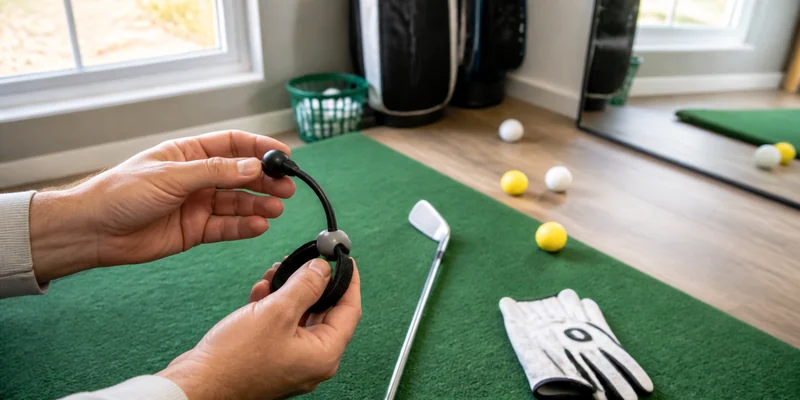
The Impact Snap is the swing trainer for the fault most golfers cannot feel: what the wrists are doing through the hitting zone. Where full-length trainers work on tempo and speed, this is a compact handheld device, a grip with a weighted ball mechanism that produces an audible click when your wrists move through the release pattern it is designed to teach. It was developed in the teaching world and has become a staple recommendation among instructors for scoopy, flippy impact positions.
This review covers what the device trains, why the indoor-friendly format is its quiet superpower, where its narrow focus becomes a limitation, and who should pick a different trainer. It is based on the product design and recurring feedback from owners and instructors, not a hands-on test.
This article contains affiliate links. If you buy through them, we may earn a commission at no extra cost to you. Learn more.
Quick Answer
Is the Impact Snap worth buying?
- Yes, if your issue lives at impact: it is designed to teach the wrist and forearm motion of a solid release, with an audible click confirming each correct rep.
- It works indoors in minutes-long sessions, which makes it one of the easiest trainers to actually use consistently.
- It trains one thing narrowly and deliberately; golfers wanting tempo, speed, or full-swing work should look at the other trainer families first.
Impact Snap at a Glance
Small device, narrow mission, low friction. That combination explains its reputation.
| Category | What to know |
|---|---|
| Type | Handheld release trainer for wrist and forearm mechanics |
| Design | Club-style grip with a weighted mechanism that clicks on a correct release motion; a ball-end reference helps check forearm alignment |
| Designed to promote | A flat lead wrist and proper release pattern through the impact area |
| Feedback | Audible click plus visual reference; no screens, apps, or batteries |
| Space needed | Minimal; living room, office, or hotel room sessions are the norm |
| Ideal for | Golfers fighting a flip, scoop, or cupped lead wrist at impact |
| Less ideal for | Tempo, sequencing, or speed goals, and golfers who want to hit balls while training |
What the Impact Snap Gets Right
It makes an invisible fault audible. Most golfers cannot feel a flip happening at speed, and video is a clumsy feedback loop for something so small and fast. The Impact Snap slows the problem down: rehearse the release motion, and the click only comes when the wrists move in the pattern it is built around. Instructors recommend it precisely because the feedback is binary and immediate, and many golfers use it while watching television, which sounds unserious and is exactly why the reps accumulate.
The format is the second strength. No ceiling clearance, no net, no setup, so it survives apartments, offices, and travel weeks that would idle every other trainer in the closet. That makes it a natural companion to the small-space practice routines in our home practice guide, alongside a putting mat for the scoring half of the game.
Where It Falls Short
The narrowness is the point, and also the limit. The Impact Snap addresses release mechanics and nothing else: no tempo, no sequencing, no speed, no strike feedback. Golfers whose real issue is a rushed transition will click away happily and change little, which is why an honest diagnosis matters before buying; our swing trainer guide sorts the families by fault.
Transfer is the other honest caveat. Rehearsing the motion in the living room is step one; grooving it with a club in hand at speed is step two, and owners report the bridge takes deliberate work, typically slow swings alternating the device with a real club. Like any aid that teaches one specific pattern, golfers mid-lesson-program should confirm with their instructor that the pattern matches what they are being taught.
How It Compares
Against full-length tempo trainers like the Orange Whip and SKLZ Gold Flex, there is no rivalry, only division of labor: they train the body’s big sequence, the Impact Snap trains the hands’ small one, and plenty of golfers own both. Against the Divot Board and similar ground-contact aids, the difference is what gets measured: those read your strike location on the ground, while the Impact Snap rehearses the wrist pattern that influences it. In the release-trainer niche itself, the Impact Snap is the instructor-endorsed benchmark.
Check It Out
How we chose: the standard Impact Snap is the version instructors recommend and the one nearly all owner feedback concerns.
🖐️ The Release Trainer
A compact handheld device that clicks when your wrists move through the release pattern it is designed to teach. Usable anywhere, in sessions short enough to survive a real schedule.

Who It Is For, and Who Should Skip It
Buy the Impact Snap if impact is your documented problem: thin and fat contact from a scoop, a cupped lead wrist on camera, or an instructor telling you the same thing every lesson. It also suits small-space golfers who want meaningful practice with zero setup, and it earns its place as the trainer that travels.
Skip it if your faults are tempo or sequencing, where a flexible weighted trainer fits better, or if distance is the goal, where a protocol system like the one in our SuperSpeed Golf review is the purpose-built tool. And if you want every practice swing to end in a ball flight, a training club such as the Lag Shot will hold your attention longer.
Alternatives Worth Considering
Three directions, depending on what your swing actually needs.
🏆 Full-Swing Alternative
The benchmark counterweighted tempo trainer, for golfers whose bigger issue is rhythm and sequencing rather than release mechanics.

🎯 Strike-Feedback Alternative
A ground-contact training board that shows where your club interacts with the turf, pairing naturally with release work.

💛 Budget Full-Swing Alternative
The value flexible tempo trainer, an inexpensive way to cover the full-swing side while the Impact Snap covers the hands.

Frequently Asked Questions
What does the Impact Snap actually train? It rehearses the wrist and forearm motion of a sound release, with an audible click confirming each correct rep. It is designed to promote a flat lead wrist through the impact area.
Can you use the Impact Snap indoors? Yes, that is its natural habitat. It needs almost no space, so living room and office sessions are exactly how most owners use it.
How often should I use it? Short, frequent sessions win: a few minutes most days beats one long weekend block. Owners commonly pair device reps with slow swings of a real club to bridge the feel.
Is the Impact Snap good for beginners? It can be, since it teaches a fundamental pattern before bad habits set in. Beginners working with an instructor should check that the device’s pattern matches their lesson plan.
Does it work for left-handed golfers? The device is used by both right- and left-handed golfers; confirm the listing covers your handedness before ordering, as configuration options have varied.
The Bottom Line
The Impact Snap does one narrow job with unusual clarity: it makes correct release mechanics audible and rehearsable anywhere, which is why instructors keep recommending it. It trains nothing else, and the feel still has to be transferred to a real club at speed. For flip and scoop patterns, it is the most practical tool in the trainer aisle.