Last updated: August 10, 2026
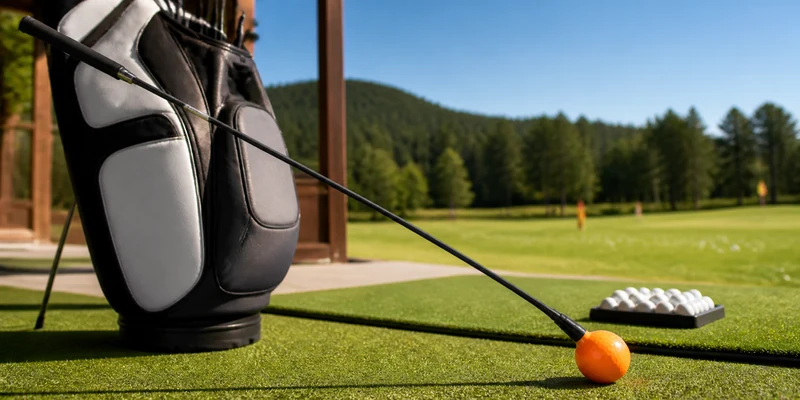
The Orange Whip is the rare training aid that shows up in tour bags, teaching studios, and suburban garages alike, and it has held that position for well over a decade. That kind of staying power is unusual in a category where most gadgets are forgotten by spring. The device itself is simple: a long, deliberately flexible shaft with a weighted orange ball on one end and a counterweight on the other, created by a PGA club professional as a rhythm and sequencing tool.
This review looks at why the Orange Whip endures, what it is actually designed to do, where it disappoints, and which golfers should pick something else instead. It is an assessment of the product’s design and long-running owner feedback patterns, not a hands-on lab test.
This article contains affiliate links. If you buy through them, we may earn a commission at no extra cost to you. Learn more.
Quick Answer
Is the Orange Whip worth buying?
- Yes, for most golfers: it is the reference tempo trainer, designed to promote smooth rhythm and sequencing, and owners report using it for years as a daily swing tool and pre-round warm-up.
- The flexible shaft gives immediate feel-based feedback: rush the transition and the whole device tells you.
- Skip it if you want to hit balls with your trainer or if your budget points elsewhere; there are honest alternatives for both cases below.
Orange Whip at a Glance
The concept has barely changed since launch, which owners treat as a feature rather than a flaw.
| Category | What to know |
|---|---|
| Type | Flexible weighted tempo and rhythm trainer; no balls are hit with it |
| Design | Whippy shaft with a weighted orange ball head and a counterweighted grip end |
| Designed to promote | Smooth tempo, proper sequencing, balance, and a complete finish |
| Versions | Multiple lengths, from a full-size model to shorter versions for smaller golfers and lower ceilings |
| Space needed | Full swing clearance; garage, backyard, or high-ceiling room |
| Ideal for | Golfers whose swing gets quick, and anyone wanting a reliable warm-up tool |
| Less ideal for | Golfers who want ball-striking feedback or a structured speed program |
What the Orange Whip Gets Right
The core idea is honest feedback through feel. Because the shaft is far more flexible than a real club and both ends are weighted, the device only swings smoothly when your body sequences correctly. Rush from the top and the ball end lags awkwardly; sway or lose balance and you feel it immediately. Many golfers use it for exactly this reason: it is one of the few aids that communicates without screens, apps, or setup time.
Durability and simplicity are the second strength. There is nothing to charge, calibrate, or subscribe to, and owner feedback consistently describes units surviving years of garage duty. It also earns a permanent role as a warm-up tool: a couple of minutes of smooth swings before a round is the habit that keeps it in the trunk. That fits the low-friction pattern our guide to practicing golf at home recommends: the aids that get used are the ones with zero setup cost.
Where It Falls Short
The Orange Whip tells you how your swing feels, not what your club face or ball is doing. There is no strike feedback, no numbers, and no way to hit balls with it, so golfers who want data will outgrow it as a sole practice tool; pairing it with a launch monitor covers that gap. The length is the second practical catch: the full-size version needs genuine ceiling height, which is why the shorter versions exist. Measure your indoor space before choosing a model.
Finally, expectations. It is a rhythm tool, not a swing rebuild in a tube. Golfers who buy it expecting a specific distance gain or an automatic fix tend to be the ones whose units end up in closets. The ones who report lasting value treat it as a daily two-minute habit.
How It Compares
Against the SKLZ Gold Flex, its most common cross-shop, the Orange Whip is the more refined take on the same flexible-weighted idea, with the counterweighted grip end most golfers credit for its balanced feel; the Gold Flex answers with a friendlier price, as our SKLZ Gold Flex review lays out. Against the Lag Shot, the difference is philosophy: the Lag Shot puts a whippy shaft on a real club head so you can hit balls, while the Orange Whip stays a pure feel tool. And against speed stick systems, there is no overlap at all; those are structured speed programs, not rhythm trainers. The full landscape is mapped in our swing trainer guide.
Check It Out
How we chose: the full-size trainer is the version most owner feedback concerns and the one that suits most golfers with outdoor or garage swing space.
🏆 The Classic Tempo Trainer
The original counterweighted flexible trainer, designed to promote smooth tempo and sequencing, with the build quality that keeps it in use for years. Choose a shorter version if your ceiling is tight.

Who It Is For, and Who Should Skip It
Buy the Orange Whip if your misses cluster when your tempo gets quick, if you want a warm-up routine that travels, or if you want one aid that will still be in use three seasons from now. It suits beginners and experienced golfers alike because the feedback scales with your sensitivity to it.
Skip it if you want to hit balls with your trainer, if you are chasing speed specifically, or if you have no space for a full swing indoors and no outdoor option; in that last case a compact release trainer like the one in our Impact Snap review fits small rooms far better.
Alternatives Worth Considering
Three directions, depending on which Orange Whip limitation matters most to you.
💛 Budget Alternative
The same flexible-weighted tempo concept at a friendlier price, with a simpler build. The natural pick if you want the idea without the premium.

🏌️ Ball-Striking Alternative
A whippy training shaft attached to a real club head, so tempo work can end with actual shots into a net or at the range.

⚡ Speed-Focused Alternative
A multi-stick overspeed training system with published protocols, for golfers whose goal is swing speed rather than rhythm.

Frequently Asked Questions
What does the Orange Whip actually train? It is designed to promote smooth tempo, proper sequencing, and balance. The flexible weighted shaft only swings well when your body moves in order, which is the feedback mechanism.
Can you hit golf balls with the Orange Whip? No. It is a swing-only trainer with a weighted ball head, not a club face. If hitting balls with a trainer matters to you, the Lag Shot takes that approach.
Which Orange Whip size should I get? The full-size model suits most golfers with outdoor or garage space; the shorter versions exist for lower ceilings and smaller golfers. Check your swing clearance before ordering rather than after.
How often should I use it? Owners who report the most value use it briefly and often: a few smooth swings most days and as a warm-up before rounds. Marathon sessions are not the point.
Is the Orange Whip good for beginners? Yes, with the usual caveat that no aid replaces instruction. Its feedback is feel-based and immediate, which beginners tend to find easier to act on than numbers.
The Bottom Line
The Orange Whip earns its reputation the honest way: a simple, durable design that gives immediate feel-based feedback on tempo and sequencing, and that golfers actually keep using. It offers no data and no ball striking, and it needs full swing clearance. As a first trainer and a lifetime warm-up tool, it is the benchmark in its category.