Last updated: August 10, 2026
The Garmin Approach R10 is the launch monitor that made real shot data feel normal for regular golfers. Before it arrived, meaningful ball and club numbers lived in units priced like used cars; the R10 put a radar, a tripod, and a phone app in a package that fits a jacket pocket. Years later it is still the default recommendation in its class, which is exactly why it deserves a review that looks past the hype.
This review reads the R10 the way a careful buyer would: what the spec sheet actually promises, what owners keep repeating after months of use, and where the compact price shows up in the product. It is an assessment of specifications and owner feedback patterns, not a hands-on lab test.
This article contains affiliate links. If you buy through them, we may earn a commission at no extra cost to you. Learn more.
Quick Answer
Is the Garmin Approach R10 worth buying?
- Yes, for range sessions, backyard nets, and golfers who want real numbers without a big-ticket purchase: it delivers a remarkably broad data set for its class.
- Temper expectations indoors: as a radar unit it wants space and ball flight, and short rooms push it toward estimated rather than tracked results.
- Skip it if your practice is exclusively a tight indoor bay; a camera unit serves that setup better.
Garmin Approach R10 at a Glance
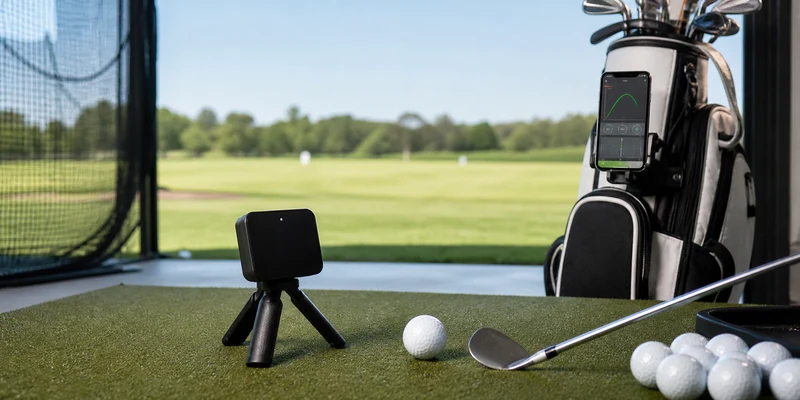
The R10 is a portable Doppler radar that sits a few feet behind the ball on a small tripod and pairs with the Garmin Golf app on your phone.
| Category | What to know |
|---|---|
| Technology | Doppler radar, positioned behind the hitting position on an included tripod |
| Data reported | Ball speed, club head speed, launch angle and direction, spin, estimated carry, and more via the app |
| Where it works | Outdoors at its best; indoors possible with enough room and ball flight per Garmin’s listed requirements |
| Subscription | Core metrics work without one; expanded virtual course play ties into Garmin Golf app membership tiers |
| Simulation | Connects to supported simulator software; third-party licenses are separate |
| Portability | Pocket-sized unit with tripod and phone app; built for the range bag |
| Ideal for | Range practice, backyard nets, first launch monitors, data-curious improvers |
| Less ideal for | Short indoor rooms, golfers who want measured spin indoors, tour-level data expectations |
What the R10 Gets Right
Breadth is the headline. For a unit this small, the R10 reports an unusually complete picture: ball and club speed, launch, spin, direction, and estimated carry, all logged automatically in the app so sessions build into a history you can actually look back on. Owners consistently mention that having every swing recorded, with video overlay if you mount your phone, changes how deliberate their range time feels. That is the practical value of the category, and the R10 delivers it at its friendliest price point.
Portability is the second strength. The unit sets up in a couple of minutes on the range, in the yard, or in a garage, and the battery comfortably covers long sessions. Third is the ecosystem: the Garmin Golf app is polished, weekly practice feels gamified in a good way, and the unit connects to supported simulator titles when you want a virtual round; our simulator software guide explains which licenses live where.
Where the R10 Falls Short
Physics is the honest limitation. Radar wants to watch the ball fly, so indoors the R10 depends on how much flight your room allows before the net. Golfers report that with generous space and careful alignment it behaves respectably, but in short rooms the spin and curve numbers lean on modeling, and results can wander if the setup shifts between sessions. If your practice is entirely a tight indoor bay, that is the R10’s weakest arena; the trade-offs are laid out in our accuracy explainer.
The second caveat is data grading. The R10 reports many numbers, but reviewers and owners generally describe some of them, particularly spin and anything derived from it, as estimates rather than tour-grade measurements. For practice trends that is fine; for fitting-level precision it is not the right tool. Finally, the full virtual course experience sits behind Garmin Golf app membership tiers, so budget for that decision if simulation is the goal.
How the R10 Compares
Against the Rapsodo MLM2PRO, the R10 wins on out-of-the-box value and no required membership for its core numbers, while the MLM2PRO answers with camera-verified spin and impact video for those willing to pay its premium tier. Against the Swing Caddie SC4, the R10 offers a deeper data set and stronger app, while the SC4 counters with a built-in display and a fully subscription-free experience. And against Garmin’s own Approach R50, the gap is technology and convenience: the R50’s cameras and touchscreen make it the better indoor simulator, at a very different price tier. Where the R10 sits in the whole field is mapped in our best golf launch monitor guide.
Check It Out
How we chose: the standard R10 package with tripod and app pairing is the configuration nearly all owner feedback describes, and the one most buyers in this class want.
🏆 The Value Benchmark in Launch Monitors
Portable radar with a broad ball and club data set, automatic session logging, and simulator connectivity, all in a pocket-sized unit that golfers keep recommending to each other.

Who It Is For, and Who Should Skip It
Buy the R10 if you practice outdoors or in a roomy garage, want honest trend data on every club, and like the idea of one device covering range work, backyard nets, and casual simulation. It is the natural first launch monitor, and it holds its own in our under-500 roundup for good reason.
Skip it if your setup is a short indoor room where the ball flies only a few feet, if you need measured spin indoors, or if you expect fitting-grade precision. Those needs point to camera units, and to a different budget conversation entirely.
Alternatives Worth Considering
Three directions, depending on which R10 limitation matters most to you.
🎯 More Data, Camera-Verified
Dual cameras plus radar, measured spin with marked balls, and impact video, with most headline features behind Rapsodo’s premium membership.

🎒 Simpler and Subscription-Free
A radar unit with its own display and voice output that never asks for a membership; the low-friction range companion.

⭐ The All-in-One Upgrade
Garmin’s camera-based R50 with a built-in touchscreen and on-device simulation, for buyers ready to make the launch monitor the centerpiece.

Frequently Asked Questions
Does the Garmin R10 need a subscription? Its core measurement features work without one. Expanded virtual course play and some app features tie into Garmin Golf membership tiers, so check the current terms if simulation is a priority.
Can the R10 be used indoors? Yes, provided your room meets Garmin’s listed space requirements for distance behind the ball and ball flight to the net. The more flight the radar sees, the more consistent owners report the numbers being.
Is the Garmin R10 accurate? For its class, golfers generally report reliable speed and launch numbers outdoors, with spin and derived values best treated as estimates, especially indoors. Our guide to launch monitor numbers explains which metrics to trust for what.
Does the R10 work with simulator software? It connects to supported titles, and third-party options exist for others; licenses for that software are separate purchases. Confirm current compatibility for the specific title you want before buying.
What do I need besides the R10 for home practice? A quality net and mat, and enough space per Garmin’s requirements. Our hitting net guide covers the safe options for garage and backyard setups.
The Bottom Line
The Garmin Approach R10 remains the sensible first launch monitor: a broad, well-logged data set, true portability, and no required membership for its core numbers. Its radar heart means it rewards space and punishes cramped rooms, so match it to an outdoor or roomy setup and it is the easiest recommendation in its class.